Leveraging LinkedIN Groups For Your Job Search

I have found that many people still do not see the obvious power that LinkedIN has as a networking tool, and I regularly spend countless coaching hours helping people establish a presence on LinkedIN, including how to find and connect to people that might be able to further their careers – which is very easy, by the way. To give you an idea of how powerful it can be, I have two personal examples of how LinkedIN groups were instrumental to job seekers:

Read More

Down But Not Out – Dealing with Job Loss

Involuntary job loss due to a reorganization or downsizing happens. Oftentimes, people don’t even see it coming. One day you are employed; the next you aren’t. Of course you will feel that initial jolt of shock; it is important that you take stock of the situation as you prepare to recharge and take the necessary steps to fuel your motivation and begin anew. Here are some tips and recommendations to get you going:

Read More

Preparing for a Successful Job Interview

Preparing for a job interview is something akin to auditioning. Of course you want to put your best foot forward and ensure you are knowledgeable about the company and your own background to make a strong impression. The interview is an opportunity for you to ‘market yourself’ to a potential hiring manager and demonstrate the skills and competencies you possess that make you a unique and compelling candidate for the role. Below are some recommendations to help you get your ‘game face on’.

Read More

Create a Resume Opening that Wows

Nothing piques reader interest quite like a succinct and powerful resume opening. Correctly executed, it can effectively target the document, ensure relevant keywords are integrated, and encourage close analysis of your work history. Here’s how:

Read More

Creating a Resume for Mothers Returning to the Workforce

I am often contacted by people (oftentimes mothers) who took an extended absence from the workforce to raise children. Those children get older and more self-sufficient; the stay at home moms decide they would like to return to the workplace. Oftentimes these women had good careers, working as attorneys, project managers, analysts, and technology professionals, among many other professions.

Read More

Keeping Up With the Joneses and Your Social Networking Strategy

It is so funny to me when I think about the phrase: Keeping up with the Joneses. To give you the dictionary version of the phrase I did a quick search online and here it is:

Keeping up with the Joneses” (http://en.wikipedia.org/wiki/Keeping_up_with_the_Joneses) is a catchphrase in many parts of the English-speaking world referring to the comparison to one’s neighbor as a benchmark for social caste or the accumulation of material goods. To fail to “keep up with the Joneses” is perceived as demonstrating socio-economic or cultural inferiority.

In the world of career planning and networking, I think there is also an element of ‘Keeping up with the Joneses’ – you want to ensure that you have the ‘right’ contacts and cultivate those relationships so that you can benefit from the assistance / advice of others. Similarly, they can benefit from your network; after all, what goes around comes around (http://en.wiktionary.org/wiki/what_goes_around,_comes_around). This brings me to the point (finally). What are some of the critical elements that should comprise your networking strategy so that you develop, maintain, and nurture the ‘right’ connections to generate results?

Social Sites: There are numerous social sites to keep you busier than you ever expected to be, or confounded, as the case may be. Facebook, LinkedIN, Plaxo, YouTube, and MySpace are just a sampling; there are hundreds of these sites with more cropping up everyday. Naturally you will not be able to join all of them; even if you could, why would you want to? Pick two or three sites that you feel comfortable with; your choice will be wholly depended on what your primary goals are with regard to enhancing your search and business strategy. Your message, objective, and time spent on these efforts should embody a professional presence where you can engage in open and productive discourse with others, share ideas, seek opinions, and form relationships.

Establishing your Objective: Depending upon your objective will certainly govern which sites you join and frequent most often. From my own research, and discussions with clients and peers I have found that sites like Facebook and MySpace are much more geared toward personal interactions – purely for chatting and sharing things about family, friends, kids, etc., whereas LinkedIN, Plaxo, and other sites operate more in the professional arena. Identifying your objective will enable you to choose the sites that are most appropriate for you.

Your Message: This is perhaps the most important part of your social strategy. Your message should be clear, concise, and to the point. If you are using social sites to facilitate your job search, it will be imperative that you are prepared to share related ideas and information regarding your background and competencies to potential hiring managers. Your online profile, résumé, and cover letter should be complete and ready for viewing / submission should the opportunity arise. If you have a blog or method of sharing your ideas with people; be sure that it is established and that you are ready to share. More importantly, be prepared to help others. Networking is a two-way street. Just as you are concerned with your search, other people are trying to achieve the same thing for their own job hunt. Communicating with others should include your willingness to help the other party, too.

Here are some items for your to do list:

1. Research which social networking sites you want to join.

2. Establish your online profile with an appropriate picture.

3. Start making connections with friends or people you know.

4.Cultivate your extended network by engaging with people that are 2nd or 3rd removed from you.

5.Contribute to online postings by either answering questions or posting information that might be interesting or useful for others.

6.Continue to expand your network by engaging people online while being receptive to new connections.

As you refine your strategy, you will learn new ways of connecting to people and establishing value in your social networks.

How’s that for ‘Keeping up with the Joneses’?

Read More

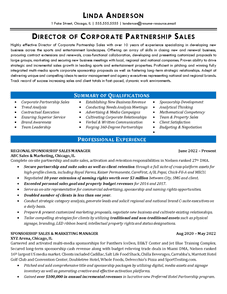
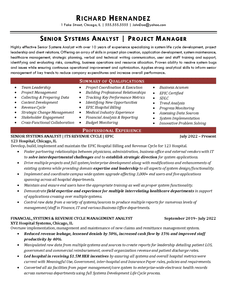
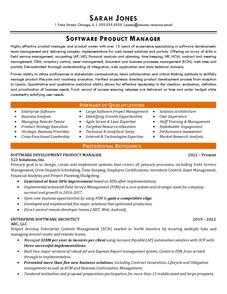
The Differences: Junior vs. Senior Level Resumes

Of course there are (and should be) differences between a senior level resume and someone who is just entering the job market or early in their career. Certainly it would look a bit strange for a senior leader or executive to reference education at the top of their resume. It would also look odd for someone with a limited amount of experience to present him or herself in a manner, which might imply that the candidate was experienced in a particular area of business (e.g. finance or accounting).

Of course everyone wants to present qualifications and credentials that will pass muster with the hiring manager. Just like there are different levels of positions, so too are there different levels of resumes. If you are just entering the workforce or have a limited amount of experience, consider the following to bolster your resume and make yourself more attractive for an entry- or junior-level position:

Junior Senior
Summary Your summary should reference any related experience that you have to contribute to the position for which you are applying. Additionally, you might include related academic training that complements the position. This will serve to demonstrate to the reader that you understand the underlying concepts of the focus of the role. Your summary should provide a strong sampling of what you have contributed in your roles in a leadership capacity. Present an example of something specific with the corresponding result to make an immediate impact. You want to provide a clear understanding that past performance is an indicator of future success.
Education If you recently graduated, reference your education at the top of the resume with some related coursework that you completed. Again, this shows your understanding of a particular topic. GPA 3.5 or greater? Your strong academic performance will allow you to stand out from the crowd. If you achieved academic honors or contributed to activities reference them. Your involvement in extracurricular or other programs demonstrates your willingness and ability to engage outside your daily educational training. They say that experience is the best teacher. That being the case, a senior level resume should highlight education at the bottom of the document.  Included within the education section should be advanced degrees or any additional training that indicates your commitment to ongoing learning. If you possess professional designations (e.g. CPA, PMP, SPHR, etc.) you can include the designation under a sub heading entitled Certifications.
Professional Experience The professional experience portion of the resume of someone who is just entering the workforce might consist of summer employment (e.g. camp counselor, waitress, part-time retail sales associate). There are still many things that can be captured from these experiences! Consider the leadership skills and patience needed to manage a group of young children for the summer; or think about the organizational and planning competencies needed to wait tables; further, how about the customer service and sales ability to work in retail? You see right there, that there are very definitely transferable skills that should be referenced to allow the reader to gain perspective regarding your potential performance. For a senior professional, this section of the resume should give the reader a clear and compelling understanding of what you did in each of your roles with the compelling results. If you are remaining in the same type of work / industry, a reverse chronological resume will probably work best. If you are considering a transition to something new, you will need to provide the reader with an understanding of your transferable skills. Consider a hybrid format to showcase your talents appropriately to make the most impact. It is likely that you will have a lot of information; you don’t need to tell the reader everything. Just ‘show a little shoulder’ to get the reader interested. You will have the interview to go into more detail.
Affiliations & Volunteer Activities This is a topic that is somewhat universal. Consider including some information on the resume about your involvement with a professional or volunteer organization. This type of information sheds light on leadership capabilities and provides further evidence of your ability to work with others in what can be dynamic and sometimes challenging environments. Reference any volunteer positions or professional affiliations with which you are aligned. If you serve in a leadership position on a Board of Directors, reference that information in this section.

No matter what level you are in your career, it is critical to highlight examples of your work and how you added value. When your resume is being reviewed in the short amount of time that hiring professionals spend with your resume, yours will remain at the top of the pile. Continue to use the SAR S: Situation, A: Action, and R: Result method when presenting your qualifications to keep the reader’s interest!

Here’s to your career success!

Read More