The Art of Creating a Great Resume
What makes for a great resume? There are so many opinions on this topic, it makes your head spin. How can you build a resume that makes you stand out in the crowd? What are the most common resume mistakes and how can you avoid them? How do you use the resume as a starting point for building your personal brand?
The current economic condition has made it very challenging for people pursuing new job opportunities. On average there are more than 50 applicants for every open job requisition – Are you better than the other 49? Standing out from the crowd is critical to facilitating success.
The value of results:
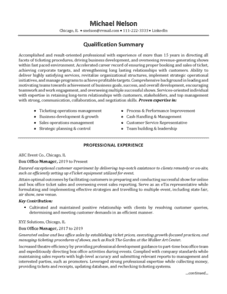
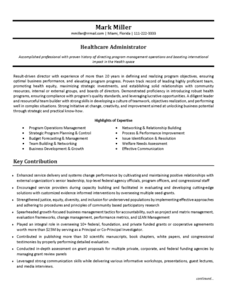
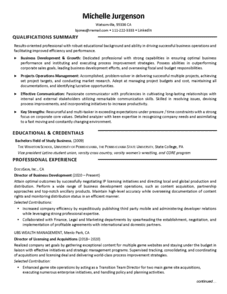
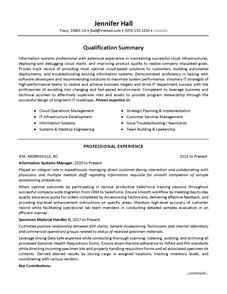
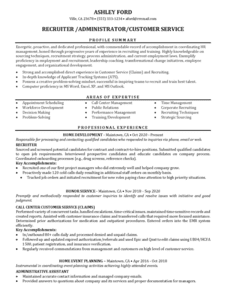
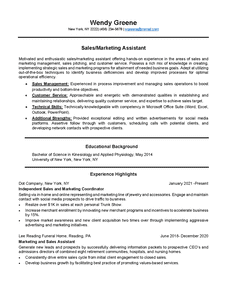
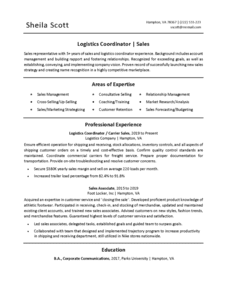
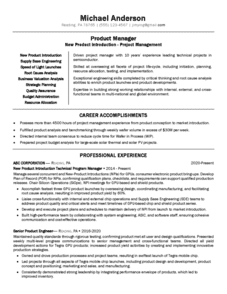
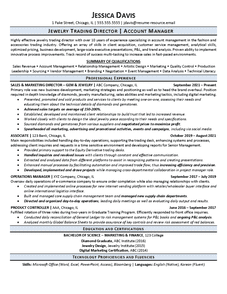
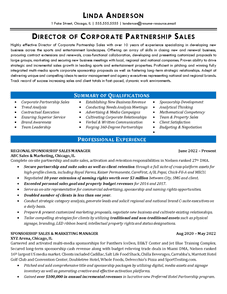
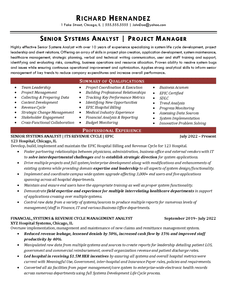
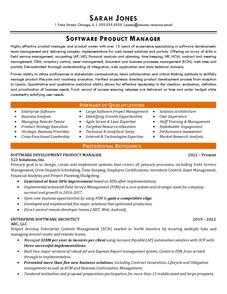
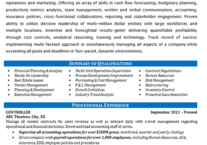
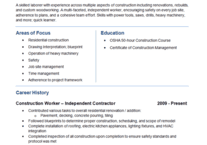
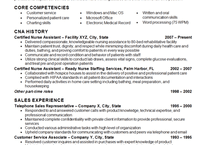
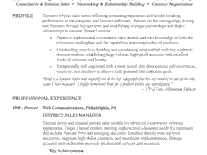
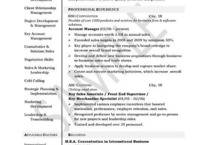
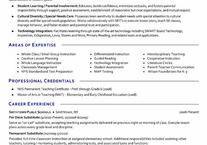
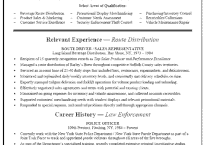
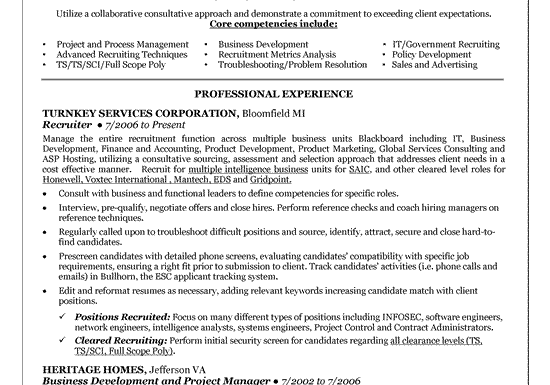
Results focused and data driven information provide a potential hiring manager with a better understanding of what you can do. Quantify your results where possible. At the top of your resume, start with a paragraph to provide the reader with some solid information. Use short phrases to quickly present the reader with your core competencies. This will be especially useful when the reader scans the document – or if a system like Taleo is used for key word search:

The summary and core competency section above sets a proper and compelling tone for the resume. It allows the reader to quickly learn something about you, including overarching abilities and sometimes personal attributes. This presentation facilitates easy scanning.
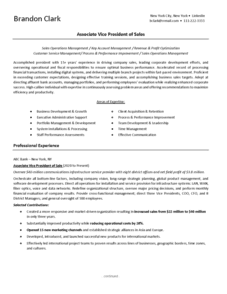
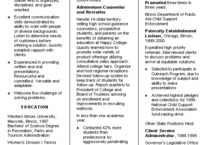
Moving ahead to the body of your resume, numbers make management notice your background and it demonstrates your ability to drive results. Use real numbers … but make sure you can defend them.

Start your professional experience by drafting a short paragraph to describe responsibilities.
Use bullets to highlight key achievements. This type of presentation will create a clear and important distinction between what you do on a day-to-day basis vs. what you have delivered for your clients or your company. Remember, the resume is a marketing tool – it should be written to engage the reader and provide information about the things that you are interested in doing again.
Tip: If you are not interested in doing a task again, do not list it on the resume.
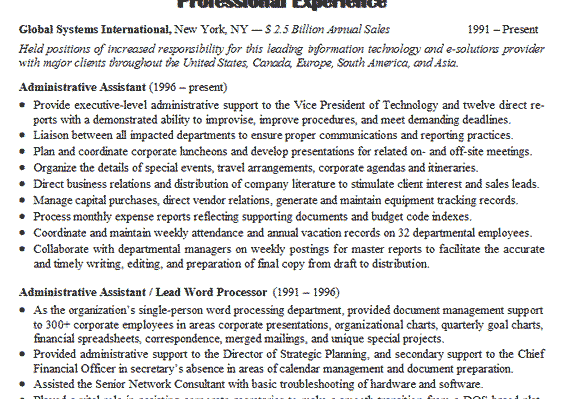
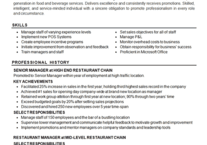
The following is an example of what your professional experience section might look like:
COMPANY NAME, Chicago, IL, 2005-Present
A leading retailer and distributor of natural stone imported from India, Brazil, Italy, Spain, Mexico, and Turkey, among others and specializing in exceptional quality and selection of stone products to meet the needs of builders, contractors, fabricators, retailers, architects, interior designers, and tile distributors. Ranked 19th among the fastest 50 growing companies in Chicago by Crain’s in 2007.
Chief Operating Officer
Spearheaded the company’s expansion from 4 locations doing $16 million in business to 16 locations throughout the Midwest and Southwest doing $50 million in business. Evangelized opportunities to improve profitability through organic growth, and worked with the Board to derive funds from shareholders to support efforts. Provided leadership to 16 vice presidents, general managers, showroom managers, and 6 corporate direct reports.
- Implemented buying processes, which included categorizing products to facilitate improved tracking of purchases and inventory. Reduced unsold inventory and identified best selling items to improve cash flow, margin, and identify replenishment points.
- Identified new sources and suppliers to optimize the supply chain. Worked with freight companies and negotiated competitive pricing to manage import and carrying costs. Identified ships and vendors that would allow increased tonnage per container.
What else should be on your resume?
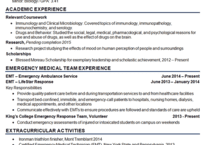
You will want to include education, advanced degrees, certifications, training, awards, affiliations (professional, community/volunteer) and compelling hobbies/interests. Compelling is the key word here. Generally hobbies and interests can be left off the resume. The caveat is that you should include them if they are really unique. For example, if you have summited Mt. Kilimanjaro or something equally noteworthy. Why something so extreme? Well, just being a voracious reader doesn’t make you all that unique. Not reading, now that would be unique. Seriously though, the general run of the mill hobbies doesn’t provide the reader with anything all that exciting. Competing in a triathlon? Now that’s an icebreaker! Now for the sample of your education and other data for the resume:
Education & Academic Achievement
UNIVERSITY OF PENNSYLVANIA, WHARTON BUSINESS SCHOOL, Philadelphia, PA (2001)
Master of Business Administration
- Coursework Emphasis: Quantitative Analytics, Corporate Finance, Portfolio Theory, and Financial Risk.
BROWN UNIVERSITY, Providence, RI (1999)
Bachelor of Arts, Mathematics and Economics (Double Degree)
- Thesis: “Name of Thesis Here”
- Leadership: Board of Trustees Investment Committee (Member), Student Investment Fund.
Professional Certifications
Professional Risk Managers’ International Association (PRMIA) – Professional Risk Manager (PRM) Designation;
Chartered Financial Analyst (CFA) Certification (Level I).
Leadership & Additional Information
Founder and former CEO of the Main Managed Fund.
Language Skills: Russian (Fluent). Computer Skills (Expert): Microsoft Excel, @Risk, Crystal Ball, Mathematica, MatLab, and Bloomberg. Knowledge of Visual Basic and C++ programming languages.
The devil is in the details. Your presentation counts, including layout, margins, font size, and style. Make sure you’re the resume is balanced with enough white space to facilitate easy reading. If you go to a second page, make sure that at least 50% of that page has content. Going over by one or two lines looks sloppy. Make sure personal details, including name, phone and email address is included at the top of the second page. When the resume is printed, the reader will be able to identify your document if the two pages become separated.
Make sure all of your career documents, including a cover letter, bio, and any other materials match to maintain a positive and pleasing brand.
The summary and core competency section above sets a proper and compelling tone for the resume. It allows the reader to quickly learn something about you, including overarching abilities and sometimes personal attributes. This presentation facilitates easy scanning.
Moving ahead to the body of your resume, numbers make management notice your background and it demonstrates your ability to drive results. Use real numbers … but make sure you can defend them.
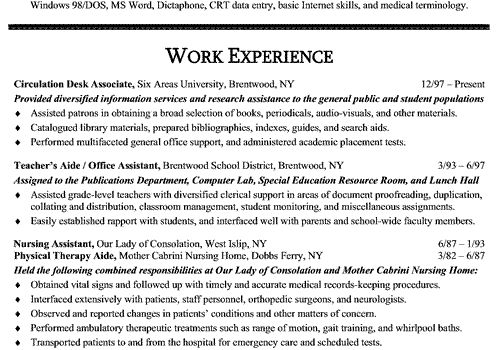
Start your professional experience by drafting a short paragraph to describe responsibilities.
Use bullets to highlight key achievements. This type of presentation will create a clear and important distinction between what you do on a day-to-day basis vs. what you have delivered for your clients or your company. Remember, the resume is a marketing tool – it should be written to engage the reader and provide information about the things that you are interested in doing again.
Tip: If you are not interested in doing a task again, do not list it on the resume.
The following is an example of what your professional experience section might look like:
COMPANY NAME, Chicago, IL 2005-Present
A leading retailer and distributor of natural stone imported from India, Brazil, Italy, Spain, Mexico, and Turkey, among others and specializing in exceptional quality and selection of stone products to meet the needs of builders, contractors, fabricators, retailers, architects, interior designers, and tile distributors. Ranked 19th among the fastest 50 growing companies in Chicago by Crain’s in 2007.
Chief Operating Officer
Spearheaded the company’s expansion from 4 locations doing $16 million in business to 16 locations throughout the Midwest and Southwest doing $50 million in business. Evangelized opportunities to improve profitability through organic growth, and worked with the Board to derive funds from shareholders to support efforts. Provided leadership to 16 vice presidents, general managers, showroom managers, and 6 corporate direct reports.
- Implemented buying processes, which included categorizing products to facilitate improved tracking of purchases and inventory. Reduced unsold inventory and identified best selling items to improve cash flow, margin, and identify replenishment points.
- Identified new sources and suppliers to optimize the supply chain. Worked with freight companies and negotiated competitive pricing to manage import and carrying costs. Identified ships and vendors that would allow increased tonnage per container.
What else should be on your resume?
You will want to include education, advanced degrees, certifications, training, awards, affiliations (professional, community/volunteer) and compelling hobbies/interests. Compelling is the key word here. Generally hobbies and interests can be left off the resume. The caveat is that you should include them if they are really unique. For example, if you have summited Mt. Kilimanjaro or something equally noteworthy. Why something so extreme? Well, just being a voracious reader doesn’t make you all that unique. Not reading, now that would be unique. Seriously though, the general run of the mill hobbies doesn’t provide the reader with anything all that exciting. Competing in a triathlon? Now that’s an icebreaker! Now for the sample of your education and other data for the resume:
Education & Academic Achievement
UNIVERSITY OF PENNSYLVANIA, WHARTON BUSINESS SCHOOL, Philadelphia, PA (2001)
Master of Business Administration
- Coursework Emphasis: Quantitative Analytics, Corporate Finance, Portfolio Theory, and Financial Risk.
BROWN UNIVERSITY, Providence, RI (1999)
Bachelor of Arts, Mathematics and Economics (Double Degree)
§ Thesis: “Name of Thesis Here”
§ Leadership: Board of Trustees Investment Committee (Member), Student Investment Fund.
Professional Certifications
Professional Risk Managers’ International Association (PRMIA) – Professional Risk Manager (PRM) Designation;
Chartered Financial Analyst (CFA) Certification (Level I).
Leadership & Additional Information
Founder and former CEO of the Main Managed Fund.
Language Skills: Russian (Fluent). Computer Skills (Expert): Microsoft Excel, @Risk, Crystal Ball, Mathematica, MatLab, and Bloomberg. Knowledge of Visual Basic and C++ programming languages.
The devil is in the details. Your presentation counts, including layout, margins, font size, and style. Make sure you’re the resume is balanced with enough white space to facilitate easy reading. If you go to a second page, make sure that at least 50% of that page has content. Going over by one or two lines looks sloppy. Make sure personal details, including name, phone and email address is included at the top of the second page. When the resume is printed, the reader will be able to identify your document if the two pages become separated.
Make sure all of your career documents, including a cover letter, bio, and any other materials match to maintain a positive and pleasing brand.
New Degree, New Resume
Your resume may have been full of content about your old career, but if you’ve completed a new degree and want to change fields there are a few things to keep in mind when crafting your new document.
Resume Proofreading Tips
We all know how important it is to ensure the final resume product is perfect. This is one area that cannot afford to be overlooked. Oftentimes, you review the document so many times it starts to blur and you can miss something glaring. Having someone else check your resume and cover for you is a great way to make sure everything is perfect. Before you do that though, here is a checklist for you to follow on your own:
Resume Report Card
We all know about report cards. I am sure that for more than a few of you memories of dread and anticipation come flooding back as if it was just yesterday you were waiting with baited breath to see that math grade. Here I am going to provide information and examples to help you understand the ‘A’ resume – the one that gets you on the high honor roll (aka – the interview).
3 ½ Truths in a Sea of Confusing Resume Advice
Let’s face it. There are a lot of do’s and don’ts when it comes to resume writing. Even the professionals disagree about what content does and doesn’t belong in a good resume. For example, some experts say you shouldn’t go back more than 10 years. Others state 15 years is fine. Still others say that you should include all of your work history on your resume.
Compensating for a Gaps in Employment
How do you compensate on your resume for a gap in employment? Naturally hiring managers want to see consistency; they want to see a professional history that does not contain gaps. Things happen though; there are personal and professional situations that sometimes come up – things that are beyond your control. So, what do you do if you have a gap on the resume? You probably won’t have the opportunity to explain it, especially if you have applied online or are submitting career documents via web-based or other anonymous means. How do you present yourself in a compelling manner even with the gap?
Snagging a Great Internship: 3 Resume-Writing Tips
It’s not uncommon for an intern-hopeful to feel shocked after realizing that they need to create a resume in order to apply for a position. Because many on-campus jobs are obtainable without a resume, some students never assume they will need it to apply for an internship. They’re wrong. The truth is many large companies require that their internship candidates submit resumes and cover letters just as job candidates are required to do. If you fall into this category, take a look at three ways that you can bring what experience you do have to life so that you can snag that great internship.
Writing Your First Technical Resume
If you’re looking to get into the IT field then learning to create a technical resume is very beneficial. For the most part, it is very similar to the standard resume; however, it’s differences lie in its ability to help you focus more specifically on your technical skills.
If you are in the midst of your first attempt to acquire an IT job then it’s good to learn the various aspects of this type of resume. So before you get started, so let’s take a look at some tips you can keep in mind as you put your first one together.
Selling You on Your Resume
Selling You on Your Resume: Job Searching in a Turbulent Economy
According to the U.S. Department of Labor, 2.6 million jobs were lost in 2008 – most within the last four months – the highest job losses in 60 years. Employers shed more than 500,000 jobs in December alone, soaring the unemployment rate to 7.2%. As cited by The New York Times, among the industries hardest hit were home-building, real estate, industrial, construction, floristry, auto, financial services, and mortgage. And predictions show the turbulence in our economy is likely to get worse before it gets better.
What does this mean for you? The good news is that while some markets are crashing, new jobs and industries are emerging, making a career transition less difficult for today’s job seeker. Companies are now finding “square peg/round hole” candidates more appealing. They’re looking for fresh ideas and vying for candidates with key transferable skills. But with the influx of competition, it’s time to get smart, stay optimistic, utilize your resources, and turn economic challenges into new job-seeking opportunities.
To begin, get serious about your resume! Now is the time to sell YOU. Your current resume may have landed you a job 10 years ago, but today the competition is very fierce, and the need to convincingly convey your value proposition is more important than ever before. Your resume is a marketing vehicle—a call to action that should generate invitations to job interviews. Does your resume tell your career story? Does it promote your most valuable assets? Have you been invited to interviews? If you answered “no” to any of these questions, then it is time to sharpen your career marketing tools. A newly focused, professional resume can be the link between you and your new job, and could catapult you to the next level of your career.
Suppose you already have a job-winning resume in hand. Your next step is to understand the different job search methods. One method is the Passive job search. While it is the most common job search method, it is without a doubt the most ineffective. A Passive job seeker will paste/upload his resume on job boards all over the Internet, and e-mail/fax his resume in response to company advertisements. He’ll wait by the phone, with fingers crossed, hoping to hear good news. But when he doesn’t get results, the Passive job seeker becomes discouraged and quickly gives up. He thinks he has done everything right to win an interview, when in reality, he has only scratched the surface of using all of the job search resources available to him.
Another job search method is the Aggressive job search. The Aggressive job seeker may use the Passive job search method as well, but he won’t stop there! The Aggressive job-seeker will follow-up with a phone call to ask about the status of the job opening, and most importantly, to ask for the interview. The Aggressive job seeker also understands the importance of networking. While networking is one of the oldest job search strategies, it remains the most effective for landing a new job. Did you know that 50% to 75% of all jobs are discovered through networking? Many great social networking sites exist on the Web, including LinkedIn, Facebook, MySpace, and Ryze, to name a few. These sites are all great tools for the Aggressive job-seeker who will proactively set up profiles on some or all of these sites. But again he won’t stop there! He will pick-up the phone and reach out to previous employers, colleagues, customers, friends, and family members, using his entire network to seek out new career opportunities.
Another resource that the Aggressive job-seeker will use is a recruiter. Many job opportunities are not advertised by employers, and since successful recruiters have relationships within many different companies, they can often be the key to the hidden job market. Most recruiters are paid by the employer and there is no cost to you. However, you should confirm this prior to meeting with a recruiter. Considering all the advantages mentioned above, coupled with the lack of financial outlay, a recruiter is a very valuable resource for the Aggressive job seeker.
Last, but not least, are aggregators. In the past, job seekers had to search individual Web sites for job advertisements. Today, with new aggregator technology, you can simply set up your job preference profile, and the aggregators will search the World Wide Web, and deliver job matches to your e-mail box from hundreds of online sources, saving you hours and hours of research. Two known favorites are Indeed.com and SimplyHired.com. Try them both!
Are you a Passive job seeker or an Aggressive job seeker? If you are a Passive job seeker a very long and difficult road to finding a new job awaits you. But if you are an Aggressive job seeker you are already on your way to landing a new job. Congratulations!
In today’s market, it is extremely important to take advantage of all the job search resources available. Remember, you face a challenging job market, not an impossible one. By thinking outside-the-box, using all available resources, challenging yourself to network, and focusing on your career goals, you’re sure to rise to the challenge and be successful in your job search.
Tips for College Student Resume Writing
If you are a college student, you may not yet be accustomed to writing resumes and cover letters. However, the time will soon come where you’ll need to learn in order to secure an on- or off-campus job, internship, or job after graduating.
You’ll be happy to know that the process is not difficult. It’s just a matter of gathering your experiences and organizing them effectively. So to give you a jump start on the writing process, let’s look at some ways you can utilize your current skills and talents to create great cover letters and resumes for the jobs you want.
Resume vs. CV (Curriculum Vitae)
Have you ever wondered what the differences are between a resume and curriculum vitae? In college, you may have heard about them both, yet since graduating, you probably have heard less about the CV and more about the resume.
Though the CV may not be as well-known as the resume, it is a very relevant job seeking tool depending on your field. So before you prepare for your first – or next – career, let’s take a look at the differences between the resume and CV to help you determine which one is best for you.
Creating Resumes for Contract and Temporary Positions
Looking to apply for a new contract or temporary position but are unsure of how to create the right resume? You’ll be happy to know that writing resumes for these types of positions is not as difficult as you think.
The major difference between resumes for temporary or contract work and those for permanent positions is the need to more specifically focus on your accomplishments and personality. Let’s explore some ways you can get this done.
MBA Resume Writing
Recently, I had the pleasure of coaching Executive MBA candidates on resume preparation. I really enjoyed the event and consider it an honor to have been invited to participate in the Resume and Interview Clinic. I met with several MBA candidates to critique their resumes based on what recruiters and HR professionals are looking for in an employee. I reviewed numerous resumes and found a common thread in both the format and ordering of almost all of the resumes. I suspected that the students had been instructed by their professors on how to prepare a resume, so I asked one of the students and he confirmed my suspicions.
Entry Level Resume Writing Ideas
Resume Tips for Those Lacking Job Experience
Are you looking to acquire your first job in many years – or your first job ever – and have heard that without experience you have no chance of finding employment? Well rest assured that this couldn’t be more wrong.
Employers understand that good employees are not solely created from skills gained on previous jobs; they are also created from skills acquired through life experience. The trick, however, is to highlight these skills while expressing your overall potential in your resume.
15 Tips for Writing Winning Resumes
The thought of writing a resume intimidates almost anyone. It’s difficult to know where to start or what to include. It can seem like an insurmountable task. Here are 15 tips to help you not only tackle the task, but also write a winning resume.
Executive and Mid Management Resume Tips
Today’s marketplace is tough! Even the best and brightest need a powerful resume to achieve career success. With the unemployment rate dropping and the labor market tightening, that means JOBS are opening up. Now is the time to get your resume in tip-top shape.
Writing a Resume – The Write Stuff
Years ago no one needed a resume. All anyone had to do was fill out an application. The system worked. Right? Wrong. Employers started asking for one-page resumes to find out more about the prospective employee. That was enough. Right? Wrong.
Writing An Accomplishment Driven Resume
In the midst of hundreds, if not thousands, of resume recruiters and employers receive for any given position, your resume needs to stand out from the crowd. You must make the Hiring Manager want to read your resume more thoroughly than just the rudimentary 10-20 seconds the vast majority of your competition will warrant. The way to do this is by designing an accomplishment driven resume.
Improve Your Resume – “What To Do When Your Resume Falls Flat”
Are you sitting by the phone, twiddling your thumbs, just waiting to get a call about the job you just posted for? Have you been sitting there a really long time? Have your calls gone unreturned? Maybe it’s time to take a closer look at your resume.
“Now What?” How to Ensure Your Resume Produces Top Results
A professionally designed resume is an important component to any job seeker; however, the overall effectiveness of the document depends on how and how often it’s used, marketing strategies utilized, and the relevance of the content. Concentrating on these important aspects is key to ensuring your resume produces well.