
Resume writing advice, tips and articles on preparing your resume

The resume writing main category covers all topics such items as: improving your resume writing technique; handling potential resume writing issues; avoiding resume mistakes; resume formats; resume verbs and other topics related resume writing.

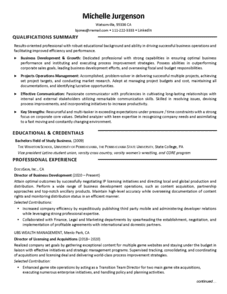
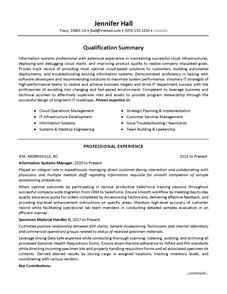
The Differences: Junior vs. Senior Level Resumes

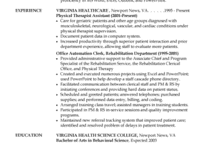
Of course there are (and should be) differences between a senior level resume and someone who is just entering the job market or early in their career. Certainly it would look a bit strange for a senior leader or executive to reference education at the top of their resume. It would also look odd for someone with a limited amount of experience to present him or herself in a manner, which might imply that the candidate was experienced in a particular area of business (e.g. finance or accounting).

Of course everyone wants to present qualifications and credentials that will pass muster with the hiring manager. Just like there are different levels of positions, so too are there different levels of resumes. If you are just entering the workforce or have a limited amount of experience, consider the following to bolster your resume and make yourself more attractive for an entry- or junior-level position:

Junior Senior
Summary Your summary should reference any related experience that you have to contribute to the position for which you are applying. Additionally, you might include related academic training that complements the position. This will serve to demonstrate to the reader that you understand the underlying concepts of the focus of the role. Your summary should provide a strong sampling of what you have contributed in your roles in a leadership capacity. Present an example of something specific with the corresponding result to make an immediate impact. You want to provide a clear understanding that past performance is an indicator of future success.
Education If you recently graduated, reference your education at the top of the resume with some related coursework that you completed. Again, this shows your understanding of a particular topic. GPA 3.5 or greater? Your strong academic performance will allow you to stand out from the crowd. If you achieved academic honors or contributed to activities reference them. Your involvement in extracurricular or other programs demonstrates your willingness and ability to engage outside your daily educational training. They say that experience is the best teacher. That being the case, a senior level resume should highlight education at the bottom of the document.  Included within the education section should be advanced degrees or any additional training that indicates your commitment to ongoing learning. If you possess professional designations (e.g. CPA, PMP, SPHR, etc.) you can include the designation under a sub heading entitled Certifications.
Professional Experience The professional experience portion of the resume of someone who is just entering the workforce might consist of summer employment (e.g. camp counselor, waitress, part-time retail sales associate). There are still many things that can be captured from these experiences! Consider the leadership skills and patience needed to manage a group of young children for the summer; or think about the organizational and planning competencies needed to wait tables; further, how about the customer service and sales ability to work in retail? You see right there, that there are very definitely transferable skills that should be referenced to allow the reader to gain perspective regarding your potential performance. For a senior professional, this section of the resume should give the reader a clear and compelling understanding of what you did in each of your roles with the compelling results. If you are remaining in the same type of work / industry, a reverse chronological resume will probably work best. If you are considering a transition to something new, you will need to provide the reader with an understanding of your transferable skills. Consider a hybrid format to showcase your talents appropriately to make the most impact. It is likely that you will have a lot of information; you don’t need to tell the reader everything. Just ‘show a little shoulder’ to get the reader interested. You will have the interview to go into more detail.
Affiliations & Volunteer Activities This is a topic that is somewhat universal. Consider including some information on the resume about your involvement with a professional or volunteer organization. This type of information sheds light on leadership capabilities and provides further evidence of your ability to work with others in what can be dynamic and sometimes challenging environments. Reference any volunteer positions or professional affiliations with which you are aligned. If you serve in a leadership position on a Board of Directors, reference that information in this section.

No matter what level you are in your career, it is critical to highlight examples of your work and how you added value. When your resume is being reviewed in the short amount of time that hiring professionals spend with your resume, yours will remain at the top of the pile. Continue to use the SAR S: Situation, A: Action, and R: Result method when presenting your qualifications to keep the reader’s interest!

Here’s to your career success!

Read More

4 Tips To Make Your Resume Scream, “Talk To Me!”

It has been said many times and in many ways, your resume is not to be designed to land you any job. It is not a biography. It is not a sales letter. Consider it more of your personal billboard. It will need to be seen, and a specific message received, probably more than once. The sales process of you convincing a prospective employer they were right in calling you in for more information, and then selling them on all the benefits to be gained by hiring you, will take place in the interview.

Read More

How to Make Your Resume Rock, Not Flop

Strong content with an aesthetically pleasing format is by far the best way to generate interest and get the interview. Having written and reviewed thousands of resumes (over 10,000 at this point!) I am still amazed by how many common errors are made on resumes and cover letters – the kinds of errors that will immediately send your resume to the trashcan. Making your resume ‘reader-friendly’ complemented by a strong proofreading (resulting in zero errors) will solidify your first place position in the interview line.

Read More

What to Consider When Writing Your Resume

What should you consider when writing your resume? Some people just don’t know where to get started. Of course it is difficult to write about yourself in a way the glorifies what you do. You don’t want to come across as arrogant. Have no fear; your resume is the one place where this is acceptable! The reader should have a clear picture of what you achieved in your professional roles to demonstrate just how wonderful you are!

Here are some instructions to help you:

Read More

Resume Tips for Recent College Grads

Graduating from college is an exciting, but also scary time. For as many people that have a clear picture of what they want to do, there are infinitely more people who are unsure as to the career path they want to take. College is a wonderful experience; and certainly you gain a lot of experience, meet people, learn to study (and hopefully not have to pull too many ‘all-nighter’s), and perhaps even get some part-time working experience so you have some extra cash. Even with all of the classes and a chosen major, sometimes the path is not so clear. One thing is very clear though – whether you have known from a young age exactly what you will be ‘when you grow up’ or if you are still exploring you interests – you will need a resume as you start your quest for entry-level employment.

Read More

The Art of Creating a Great Resume

What makes for a great resume? There are so many opinions on this topic, it makes your head spin. How can you build a resume that makes you stand out in the crowd? What are the most common resume mistakes and how can you avoid them? How do you use the resume as a starting point for building your personal brand?

The current economic condition has made it very challenging for people pursuing new job opportunities. On average there are more than 50 applicants for every open job requisition – Are you better than the other 49? Standing out from the crowd is critical to facilitating success.

The value of results:

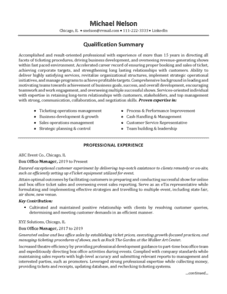
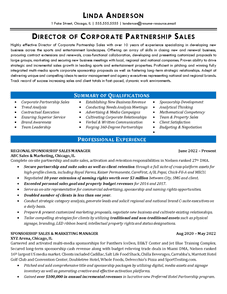
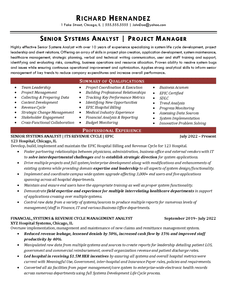
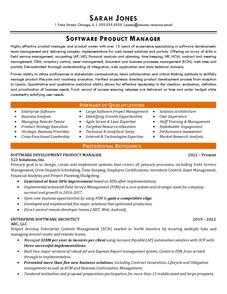
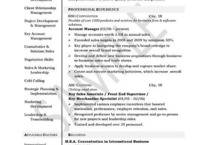
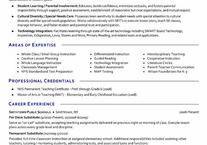
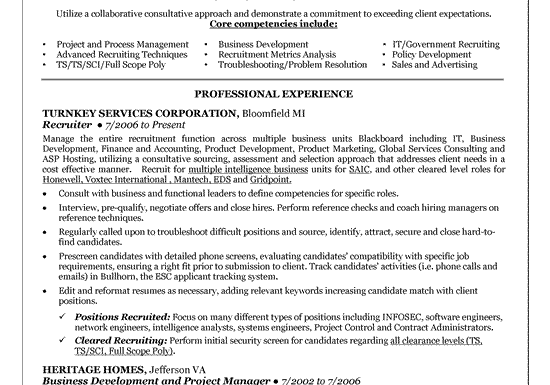
Results focused and data driven information provide a potential hiring manager with a better understanding of what you can do. Quantify your results where possible. At the top of your resume, start with a paragraph to provide the reader with some solid information. Use short phrases to quickly present the reader with your core competencies. This will be especially useful when the reader scans the document – or if a system like Taleo is used for key word search:

resume writing

The summary and core competency section above sets a proper and compelling tone for the resume. It allows the reader to quickly learn something about you, including overarching abilities and sometimes personal attributes. This presentation facilitates easy scanning.

Moving ahead to the body of your resume, numbers make management notice your background and it demonstrates your ability to drive results. Use real numbers … but make sure you can defend them.

Start your professional experience by drafting a short paragraph to describe responsibilities.

Use bullets to highlight key achievements. This type of presentation will create a clear and important distinction between what you do on a day-to-day basis vs. what you have delivered for your clients or your company. Remember, the resume is a marketing tool – it should be written to engage the reader and provide information about the things that you are interested in doing again.

Tip: If you are not interested in doing a task again, do not list it on the resume.

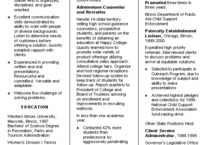
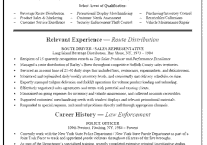
The following is an example of what your professional experience section might look like:

COMPANY NAME, Chicago, IL, 2005-Present

A leading retailer and distributor of natural stone imported from India, Brazil, Italy, Spain, Mexico, and Turkey, among others and specializing in exceptional quality and selection of stone products to meet the needs of builders, contractors, fabricators, retailers, architects, interior designers, and tile distributors. Ranked 19th among the fastest 50 growing companies in Chicago by Crain’s in 2007.

Chief Operating Officer

Spearheaded the company’s expansion from 4 locations doing $16 million in business to 16 locations throughout the Midwest and Southwest doing $50 million in business. Evangelized opportunities to improve profitability through organic growth, and worked with the Board to derive funds from shareholders to support efforts. Provided leadership to 16 vice presidents, general managers, showroom managers, and 6 corporate direct reports.

  • Implemented buying processes, which included categorizing products to facilitate improved tracking of purchases and inventory. Reduced unsold inventory and identified best selling items to improve cash flow, margin, and identify replenishment points.
  • Identified new sources and suppliers to optimize the supply chain. Worked with freight companies and negotiated competitive pricing to manage import and carrying costs. Identified ships and vendors that would allow increased tonnage per container.

What else should be on your resume?

You  will want to  include education, advanced degrees, certifications, training, awards, affiliations (professional, community/volunteer) and compelling hobbies/interests. Compelling is the key word here. Generally hobbies and interests can be left off the resume. The caveat is that you should include them if they are really unique. For example, if you have summited Mt. Kilimanjaro or something equally noteworthy. Why something so extreme? Well, just being a voracious reader doesn’t make you all that unique. Not reading, now that would be unique. Seriously though, the general run of the mill hobbies doesn’t provide the reader with anything all that exciting. Competing in a triathlon? Now that’s an icebreaker! Now for the sample of your education and other data for the resume:

Education & Academic Achievement

UNIVERSITY OF PENNSYLVANIA, WHARTON BUSINESS SCHOOL, Philadelphia, PA (2001)

Master of Business Administration

  • Coursework Emphasis: Quantitative Analytics, Corporate Finance, Portfolio Theory, and Financial Risk.

BROWN UNIVERSITY, Providence, RI (1999)

Bachelor of Arts, Mathematics and Economics (Double Degree)

  • Thesis: “Name of Thesis Here”
  • Leadership: Board of Trustees Investment Committee (Member), Student Investment Fund.
Professional Certifications

Professional Risk Managers’ International Association (PRMIA) – Professional Risk Manager (PRM) Designation;

Chartered Financial Analyst (CFA) Certification (Level I).

Leadership & Additional Information

Founder and former CEO of the Main Managed Fund.

Language Skills: Russian (Fluent). Computer Skills (Expert): Microsoft Excel, @Risk, Crystal Ball, Mathematica, MatLab, and Bloomberg. Knowledge of Visual Basic and C++ programming languages.

The devil is in the details. Your presentation counts, including layout, margins, font size, and style. Make sure you’re the resume is balanced with enough white space to facilitate easy reading. If you go to a second page, make sure that at least 50% of that page has content. Going over by one or two lines looks sloppy. Make sure personal details, including name, phone and email address is included at the top of the second page. When the resume is printed, the reader will be able to identify your document if the two pages become separated.

Make sure all of your career documents, including a cover letter, bio, and any other materials match to maintain a positive and pleasing brand.

The summary and core competency section above sets a proper and compelling tone for the resume. It allows the reader to quickly learn something about you, including overarching abilities and sometimes personal attributes. This presentation facilitates easy scanning.

Moving ahead to the body of your resume, numbers make management notice your background and it demonstrates your ability to drive results. Use real numbers … but make sure you can defend them.
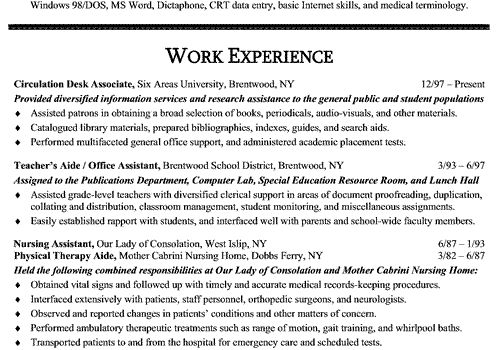
Start your professional experience by drafting a short paragraph to describe responsibilities.

Use bullets to highlight key achievements. This type of presentation will create a clear and important distinction between what you do on a day-to-day basis vs. what you have delivered for your clients or your company. Remember, the resume is a marketing tool – it should be written to engage the reader and provide information about the things that you are interested in doing again.

Tip: If you are not interested in doing a task again, do not list it on the resume.

The following is an example of what your professional experience section might look like:

COMPANY NAME, Chicago, IL 2005-Present

A leading retailer and distributor of natural stone imported from India, Brazil, Italy, Spain, Mexico, and Turkey, among others and specializing in exceptional quality and selection of stone products to meet the needs of builders, contractors, fabricators, retailers, architects, interior designers, and tile distributors. Ranked 19th among the fastest 50 growing companies in Chicago by Crain’s in 2007.

Chief Operating Officer

Spearheaded the company’s expansion from 4 locations doing $16 million in business to 16 locations throughout the Midwest and Southwest doing $50 million in business. Evangelized opportunities to improve profitability through organic growth, and worked with the Board to derive funds from shareholders to support efforts. Provided leadership to 16 vice presidents, general managers, showroom managers, and 6 corporate direct reports.

  • Implemented buying processes, which included categorizing products to facilitate improved tracking of purchases and inventory. Reduced unsold inventory and identified best selling items to improve cash flow, margin, and identify replenishment points.
  • Identified new sources and suppliers to optimize the supply chain. Worked with freight companies and negotiated competitive pricing to manage import and carrying costs. Identified ships and vendors that would allow increased tonnage per container.

What else should be on your resume?

You will want to include education, advanced degrees, certifications, training, awards, affiliations (professional, community/volunteer) and compelling hobbies/interests. Compelling is the key word here. Generally hobbies and interests can be left off the resume. The caveat is that you should include them if they are really unique. For example, if you have summited Mt. Kilimanjaro or something equally noteworthy. Why something so extreme? Well, just being a voracious reader doesn’t make you all that unique. Not reading, now that would be unique. Seriously though, the general run of the mill hobbies doesn’t provide the reader with anything all that exciting. Competing in a triathlon? Now that’s an icebreaker! Now for the sample of your education and other data for the resume:

Education & Academic Achievement

UNIVERSITY OF PENNSYLVANIA, WHARTON BUSINESS SCHOOL, Philadelphia, PA (2001)

Master of Business Administration

  • Coursework Emphasis: Quantitative Analytics, Corporate Finance, Portfolio Theory, and Financial Risk.

BROWN UNIVERSITY, Providence, RI (1999)

Bachelor of Arts, Mathematics and Economics (Double Degree)

§ Thesis: “Name of Thesis Here”

§ Leadership: Board of Trustees Investment Committee (Member), Student Investment Fund.

Professional Certifications

Professional Risk Managers’ International Association (PRMIA) – Professional Risk Manager (PRM) Designation;

Chartered Financial Analyst (CFA) Certification (Level I).

Leadership & Additional Information

Founder and former CEO of the Main Managed Fund.

Language Skills: Russian (Fluent). Computer Skills (Expert): Microsoft Excel, @Risk, Crystal Ball, Mathematica, MatLab, and Bloomberg. Knowledge of Visual Basic and C++ programming languages.

The devil is in the details. Your presentation counts, including layout, margins, font size, and style. Make sure you’re the resume is balanced with enough white space to facilitate easy reading. If you go to a second page, make sure that at least 50% of that page has content. Going over by one or two lines looks sloppy. Make sure personal details, including name, phone and email address is included at the top of the second page. When the resume is printed, the reader will be able to identify your document if the two pages become separated.

Make sure all of your career documents, including a cover letter, bio, and any other materials match to maintain a positive and pleasing brand.

Read More

New Degree, New Resume

Your resume may have been full of content about your old career, but if you’ve completed a new degree and want to change fields there are a few things to keep in mind when crafting your new document.

Read More

Words That Should Not Appear on Your Resume

Resume content always seems to spark the ‘great debate’. What should be written vs. what should not be written – this is the burning question. What do employers want to see? How can you wow them with the wonders of you conveyed on an 8 ½ X 11 piece of paper – even if it is printed on paper so soft and thick you could make a shirt out if it?

Read More

Top Five Things Not to Include on Your Resume

Ah! The joys of looking for work! It can be (and often is) challenging, frustrating, and filled with setbacks until the right fit is found. Of course you want to make sure that you present yourself in a professional manner, sharing pertinent and relevant information with a potential employer. There are, however, some rules of the road, if you will – things that should never be uttered. resume etiquette is critical. The following is a short list of things that you should never, ever include on your professional resume:

Read More

Top Strangest Things Seen on a Resume

I have seen some and received some very interesting (and very strange) things on clients’ resumes. For some reason, people think that a resume is a forum to broadcast all manner of information. The obvious errors notwithstanding, below is a list of some of the strangest things I have seen, received, or been asked to include on a resume. It goes without saying that your document should capitalize on your professional strengths. Not sure? Get a second opinion. Here goes:

Read More

Resume Proofreading Tips

We all know how important it is to ensure the final resume product is perfect. This is one area that cannot afford to be overlooked. Oftentimes, you review the document so many times it starts to blur and you can miss something glaring. Having someone else check your resume and cover for you is a great way to make sure everything is perfect. Before you do that though, here is a checklist for you to follow on your own:

Read More

Resume Report Card

We all know about report cards. I am sure that for more than a few of you memories of dread and anticipation come flooding back as if it was just yesterday you were waiting with baited breath to see that math grade. Here I am going to provide information and examples to help you understand the ‘A’ resume – the one that gets you on the high honor roll (aka – the interview).

Read More

Writing a Resume That Matters

Writing your own resume can be a real challenge. Most people find it difficult to glorify themselves, and even when they do, they reread it and think to themselves, “Am I this good?” “No way – this sounds totally pompous and overblown!” Why is it then that when you read someone else’s document, you are impressed (sometimes)? They did not seem to have a problem providing examples and winning details that make them shine.

Read More

Resume Do’s and Don’ts

While there are no hard and fast rules regarding resume preparation, there are certain things that are definitely part of the do and don’t list. If you want a strong résumé that generates results, (who doesn’t?) then the following information will certainly be helpful as you embark on creating your own self-marketing masterpiece:

Read More

Tutorial – Converting a Word Resume to ASCII Text

I am consistently asked by my writing clients the value of an ASCII (plain text) resume. This easy to create document is an important part of your search. Why? As you apply for online opportunities, you will need to upload a document that is free of formatting. Failure to do this will cause problems. You will find that if you try to upload a formatted document, it might appear with strange characters and spacing issues.

Read More

3 ½ Truths in a Sea of Confusing Resume Advice

Let’s face it. There are a lot of do’s and don’ts when it comes to resume writing.  Even the professionals disagree about what content does and doesn’t belong in a good resume. For example, some experts say you shouldn’t go back more than 10 years.  Others state 15 years is fine.  Still others say that you should include all of your work history on your resume.

Read More

Resumes Done Write

Resume writing can be a tricky thing. What type should you use? Should it be hybrid, reverse chronological or functional? How do you know which one is right for your particular situation? Color? Do you need color? What about a picture – of yourself or something else? How do you figure out what to do?

Read More

Top Five Reasons Why Your Resume Sucks!

You have sent out hundreds and hundreds of resumes with barely a response. You reason that it’s the economy and some other factors that you are simply not aware of. How can this be? No response whatsoever? You have accomplished a lot; you were well liked in your last role and did a number of things for the company that even resulted in a promotion. So what’s going on? I will tell you. It has nothing to do with you. It’s your resume that sucks! What’s wrong with your resume? It may be these top five things:

Read More

Don’t Use that Verb, Use These

After having written more than 10,000 resumes and telling people constantly that there are more verbs out there than managed and developed, I decided to put pen to paper (or let my fingers do the walking on the keyboard in this case) to give you some help with other verbs. Don’t get me wrong – there is nothing wrong with managed or developed. The issue is that when writing a résumé, people use them all the time – I mean in every line. You want to engage the reader, not help the person lapse into a coma. I realize that these don’t exactly correlate. I want to give you some ideas. Without further ado, here is a list (albeit a short list) of alternative verbs that you should consider.

Read More

Making Time for the Interview

I cannot begin to tell you how many times my clients and friends talk to me and ask my advice about interviewing. Of course you would expect this given what I do for a living. What I mean is, they need guidance about making time to interview; yes, they don’t know where to fit it into their hectic schedules. For those people actively looking that are not presently employed this is not an issue. Many of the people that seek my advice are working; they cannot find time during their hectic workday to get to interview. At some point, we have all been in this quandary – how to conduct the job search when there is seemingly little to no time to actually TRY and get another position.

Read More